Learning
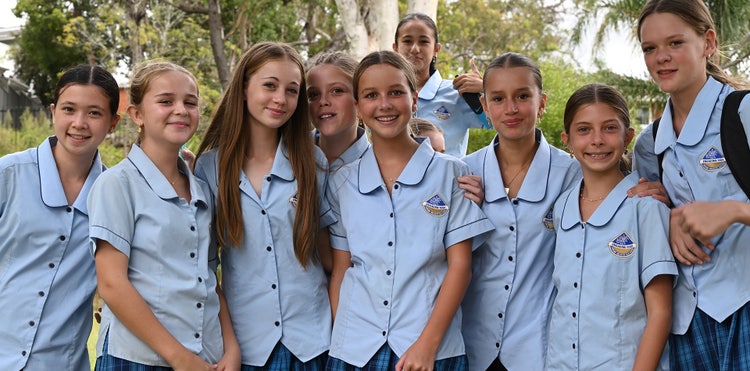
At our school, we teach the NSW curriculum and offer many different subjects to support each student’s learning. We know that development of skills in literacy and numeracy are the building blocks for learning and for everyday life. Our teachers use effective teaching strategies to help students achieve their goals.
Assessment is a vital part of learning at Engadine High School. It helps teachers understand how students are progressing, informs classroom practice, and supports students to take ownership of their learning.
Assessment at our school is designed to be valid, purposeful and fair. Teachers use a range of assessment types to ensure students can demonstrate their knowledge and skills in meaningful ways. Assessment tasks are aligned to syllabus outcomes and are guided by principles of quality, consistency and academic integrity.
We use both formative and summative assessment:
- Formative assessment takes place every day in classrooms. Teachers use questioning, feedback, classroom activities and short tasks to gather evidence of learning. This ongoing assessment helps guide lesson planning and gives students regular feedback to improve. It also means that every lesson matters, as teachers are making informed, professional judgments over time.
- Summative assessment refers to formal tasks that are used to make judgments about student achievement at key points during the year. These tasks are mapped to course outcomes and are marked against clear criteria.
In Years 7 to 10, assessment is designed to reduce overload and support depth of learning. Students complete:
- No more than two formal tasks per subject in Years 7 to 9
- No more than three formal tasks per subject in Year 10
In Years 11 and 12, assessment contributes to formal credentialing through the Record of School Achievement (RoSA) and the Higher School Certificate (HSC).
- Each subject has a published assessment schedule that outlines task types, weightings and due dates
- Tasks are aligned with syllabus outcomes and NESA requirements
- Students are expected to meet deadlines, uphold academic honesty and engage meaningfully with feedback
All students in Years 10, 11 and 12 receive a printed Assessment Booklet, which outlines school expectations, task schedules and procedures for extensions, illness and misadventure. These are also available on our website and should be referred to regularly.
Managing illness, misadventure and leave
Students in Years 10, 11 and 12 who are unwell, affected by unforeseen circumstances or taking approved leave must follow the procedures outlined in the Assessment Booklet. This includes completing an Illness and Misadventure form and providing appropriate evidence. Early communication with the school is essential.
In Years 7 to 9, students who miss or have difficulty with a task should speak directly with their classroom teacher, who will manage alternative arrangements as needed.
All students are expected to submit work on time and follow appropriate procedures where issues arise. Full details are available in the year group Assessment Booklets.
Learning support and assessment adjustments
Students who require adjustments to assessment tasks due to diagnosed learning needs, disabilities or medical conditions are supported through the school's Learning Support Team. This includes provisions such as additional time, modified tasks or alternate formats, depending on individual needs.
Adjustments are designed to ensure all students can access and demonstrate their learning in ways that reflect their strengths. Families are encouraged to communicate with the school early to ensure these supports are in place.
Assessment at Engadine High School is not just about grades. It is a structured process that supports learning, builds independence and prepares students for future study and work. We are committed to delivering valid, inclusive and high-quality assessment that gives every student the chance to succeed.
Reporting to Parents and Carers
Engadine High School provides formal academic reports twice each year, at the end of Term 2 and Term 4, along with an interim report for Year 7 and Year 11 at the end of Term 1. These reports are designed to give families a clear picture of student progress, achievement and engagement at key points in the year.
Reporting at our school is based on a standards based approach. Students are assessed and graded against syllabus outcomes, not ranked against one another. Teachers use the NSW Department of Education’s Common Grade Scale to determine the grade (A to E) that best reflects each student’s level of achievement.
Each formal report includes:
- A grade for each subject based on performance against course outcomes
- Written comments or feedback that highlight strengths and areas for improvement
- A rating of your child’s effort, commitment and attitude to learning
- Attendance data for the reporting period
- A list of extracurricular activities your child has participated in
Reports are informed by both formal assessment tasks and classroom based learning. They are designed to be clear, constructive and useful for setting goals and supporting progress.
Following each reporting period, families are invited to attend parent teacher interviews to discuss progress and next steps. We also encourage parents and carers to use the Sentral Parent Portal throughout the year to track assessments, attendance and upcoming events.
If you have any questions about your child’s report, please contact their classroom teacher, Year Adviser or Deputy Principal.
Further Information on Statewide Assessment and Reporting
Teachers observe students' work in class and look closely at tasks throughout the year. They also formally assess a student's achievement based on the outcomes described in the syllabus of the subject.
As a parent or carer, you’ll receive a written report twice a year. It gives you a clear picture of your child’s achievements – what they know and can do.
In Years 7 to 10, we use the common grade scale in reporting. In Year 11, we use the Preliminary grade scale.
Vocational Education and Training (VET) courses are assessed on achievement of competencies.
Assessments
We provide detailed information to students about what we expect from them throughout the year and how their work will be assessed. Students have a number of formal assessments throughout their schooling.
- National Assessment Program – Literacy and Numeracy (NAPLAN) – reading, writing, language conventions (spelling, punctuation and grammar) and numeracy tests for students in Years 7 and 9. The Australian Curriculum, Assessment and Reporting Authority (ACARA) holds the tests in May each year. Results and student reports are released in August.
- Validation of Assessment for Learning and Individual Development (VALID) – online diagnostic science assessments for students in Year 8. Some schools also choose to sit the tests in Year 10.
- The Record of School Achievement (RoSA) is awarded to eligible students who leave school before completing their Higher School Certificate. The RoSA records a student’s grades between the end of Year 10 and when they leave school.
- The Higher School Certificate (HSC) is an internationally recognised qualification awarded to students who successfully complete Years 11 and 12 in NSW.
- Some students may apply for placement in a selective high school. For more information, visit selective high schools and opportunity classes.
Our teachers use a variety of strategies to assess student learning.
Year 8 students at Engadine High, this is your opportunity to choose some of the subjects you study at school. The first two years at high school have provided experiences in a wide range of subjects to support the best choice of electives for you in Years 9 and 10.
For all young people today the question, “what does the future hold?” is especially challenging and exciting. Technology expands, social attitudes change, traditional job opportunities and careers are constantly evolving.
The future will be more demanding, there will be greater competition for jobs and these jobs will demand higher levels of skill. This means that educational opportunities, better training and respected qualifications are essential assets for young people entering the workforce.
This is particularly the case for people of your age. So, as Year 10 students of Engadine High, your future options need to be considered very carefully.
Innovation. Collaboration. Real-World Learning.
At Engadine High School, Project-Based Learning (PBL) is a core part of our approach to future-focused education. It challenges students to think critically, work collaboratively, and apply their learning in creative and practical ways.
Students step outside their usual classroom structure to engage in intensive, team-based projects that mirror real-world challenges. These experiences develop essential skills such as communication, leadership, adaptability, and problem-solving—preparing students for success in school and beyond.
Year 8 Project: Global Sporting Innovation

All Year 8 students take part in an exciting four-day program that blends sport, culture, and creative design. After a period of explicit teaching, students work in teams to explore a global sporting theme.
-
In 2024, the focus was the Olympic Games, where students engaged in:
- Architecture and stadium design
- Sporting game creation
- Public speaking and media presentations
- Graphic design and marketing
- Historical and cultural inquiry
-
In 2025, the project will centre on the FIFA World Club Championship, continuing our focus on global themes, collaboration, and innovation.
This project encourages students to explore the connections between sport, society, and culture while developing practical and transferable skills. Each project culminates in a major presentation, showcasing students' learning and creativity
Year 9 Project: Innovation and Entrepreneurship
Year 9 students in the enrichment stream engage in a high-level, "Shark Tank"-style challenge. Over four days, students create their own product, business, or sustainable home with a strong community or environmental focus.
Students explore:
- Financial literacy and planning
- Business and marketing strategy
- Graphic design and website development
- Public speaking and pitching to an audience
With support from teacher mentors and often guest speakers from industry, students present their ideas to a panel, mirroring the professional pitch process. This experience gives students a genuine insight into entrepreneurial thinking, design processes, and teamwork in action.
Why Project-Based Learning Matters
PBL gives students the chance to apply what they’ve learned in authentic, engaging contexts. They work in teams, solve complex problems, and produce outcomes that reflect real-world challenges. Students learn how to lead, compromise, take initiative, and persist through trial and error.
Our school has a proud history of delivering innovative PBL programs. From STEAM challenges, Superhero comic designs, to zombie apocalypse survival scenarios, Engadine High School continues to lead in designing exciting, relevant, and challenging experiences for students.
Each year, these projects evolve and respond to contemporary global themes. They reflect our belief that education should not just prepare students for exams, but prepare them for the future.

English
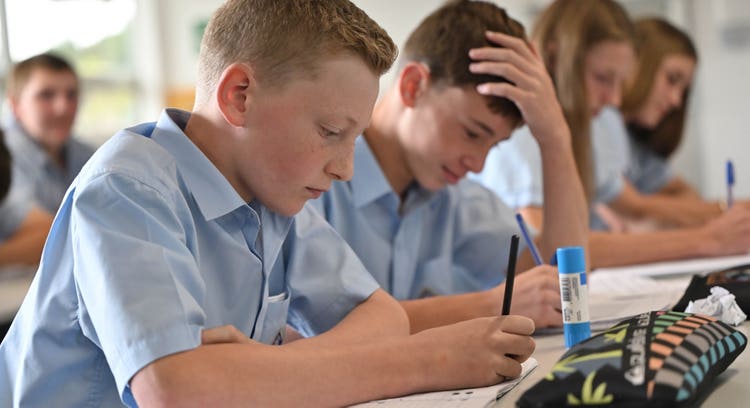
The English department at EHS is committed to the creation of confident communicators, imaginative thinkers and informed citizens through our rigorous 7-12 English program.
Mathematics
“If people do not believe that Mathematics is simple, it is only because they do not realise how complicated life is.”
Danica McKellar
CAPA
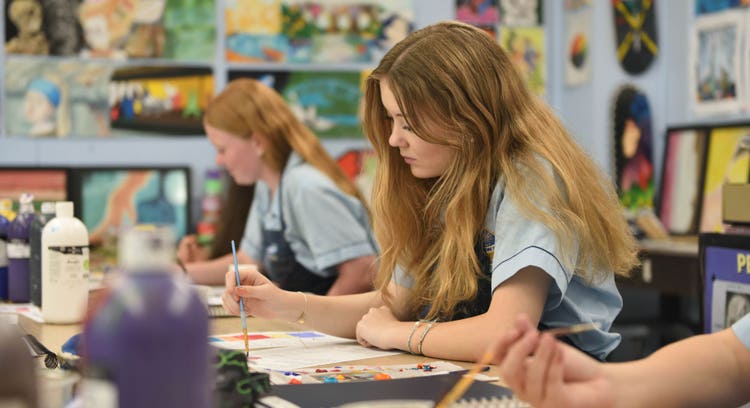
Our CAPA program nurtures creativity and self-expression through a wide range of artistic disciplines, including music, dance, drama, and visual arts.

HSIE
The HSIE faculty offers a dynamic and engaging learning environment, helping students become connected, active global citizens who understand the world and the historical events that have shaped it.
Languages
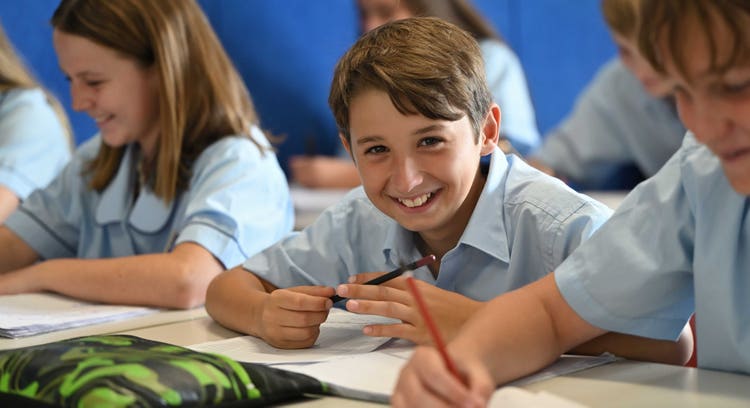
Language study helps students develop communication skills, understand how languages work, and explore the connection between language and culture.

PDHPE
The experienced PDHPE staff at Engadine High school are passionate advocates for life-long health and physical well-being and will work with you to develop and consolidate such traits.
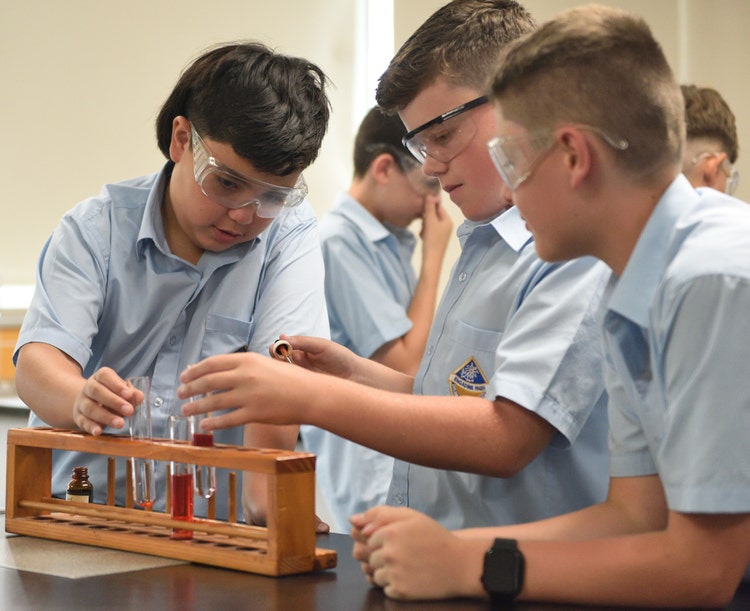
Science
Our students build their critical thinking and problem solving skills through their experiences in Science. We want our students to understanding the natural world by utilising scientific ideas and processes.

TAS
Our TAS program develops practical skills, creativity, and problem-solving through hands-on learning in design, engineering, and digital technologies—preparing students to innovate and succeed.
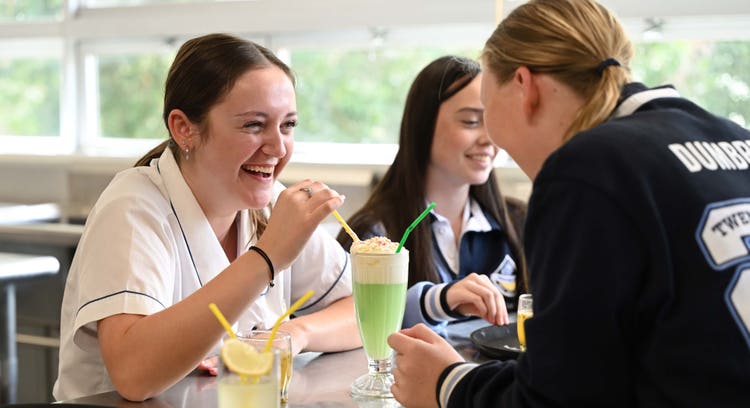
VET
Our VET program equips students with practical skills, industry knowledge, and workplace experience, preparing them for successful careers and future opportunities.
What students learn
Students learn a wide range of subjects in the NSW curriculum. They build skills, think creatively and prepare for life beyond school.
At our school, we give the right support to help gifted learners to grow and do their best.
We notice these students early. They may learn quickly or show strong skills in creativity, leadership, problem solving or sport. We help them stay challenged with lessons and activities that match their strengths.
SRE Organisation
At Engadine High School, SRE runs for 1 period once a fortnight for Years 7 to 10.
SRE Teachers authorised by local SRE Providers facilitate these lessons.
Students who have opted out of SRE are supervised by their classroom teachers. During this time, these students are reading or doing quiet study. They are not engaged in school curriculum activities.
SRE Providers
The following SRE Providers have agreed to deliver combined Christian SRE.
Anglican Diocese of Sydney – Heathcote Engadine Anglican Church
Baptist Union of NSW – Heathcote Engadine Anglican Church
Catholic Diocese of Sydney – Parish of St John Bosco, Engadine
Fellowship of Congregational Churches – Engadine Congregational Church
Presbyterian Church of Australia (NSW) – Engadine Presbyterian Church
Authorised SRE Teachers
The SRE teacher listed below is appropriately authorised by the above SRE Providers according to Department of Education guidelines, has SRE Accreditation Training and has met relevant requirements under the Child Protection (Working with Children) Act 2012 and the Child Protection (Working with Children) Regulation 2013.
In compliance with the Department of Education’s Religious Education Implementation Procedures, the teachers have had their WWCC number verified by their authorising SRE Provider.
Mr Greg Brooks - Baptist Union of NSW
SRE Curriculum
The SRE curriculum taught at Engadine High School is Think Faith – Authorised by Anglican Church Diocese of Sydney. The curriculum scope and sequence can be found here - https://whysre.com.au/images/files/Think_Faith_Scope_And_Sequence.pdf
Our learning approach
Our school uses explicit teaching. This means we clearly tell students what they are learning, why it is important and how to do it step by step. Explicit teaching helps students understand new ideas by breaking them into smaller parts.
Learning at our school is student-centred, inclusive and practical. We are committed to equity and access. We support all learning styles and needs. Our teachers use proven teaching strategies. They take part in ongoing professional development to stay up to date with best teaching practice.
Our learning approach includes:
- real-world learning: hands-on tasks, group work and exploring new ideas
- technology: to help students learn and build digital skills
- flexible teaching: the right support for each student, with a focus on wellbeing
- community connections: through excursions and local programs.
Helping students progress
We support every student’s academic progress by:
- checking their progress and giving clear and timely feedback
- setting learning goals with each student
- giving extra help with personalised plans and support from specialist staff
- reporting on each student’s learning progress so parents and carers know how their child is doing
- providing targeted literacy and numeracy support in small groups
- making wellbeing part of everyday learning
- working with families to support learning at home and school
- helping students through transitions, like starting school or moving to a new stage of learning.
Learn more about additional learning support at our school.
Want to know more about our subjects?
We can connect you with the right teacher or staff member.
Student opportunities and activities
Discover clubs, sports and other activities your child can enjoy at school.
Our principal and staff
Get to know our principal and staff, who work together to create a positive school culture.